The Karnataka analogue paneer ban is a statewide one-year ban on non-standardised substitutes sold or used as paneer. Analogue paneer resembles dairy paneer, but replaces some or all milk fat or milk solids with vegetable oil, vegetable fat or other non-dairy ingredients.
The order covers manufacture, processing, packing, storage, transport, distribution, sale and use in prepared food.
The substitute existing is not the entire scandal. The problem is calling it paneer when the regulated definition of paneer begins with milk.
The paneer had left the dairy industry without updating LinkedIn.
What is analogue paneer?
It is a paneer-like product made by replacing milk components with cheaper non-dairy ingredients. It can look and cook similarly, which makes honest labelling essential.
Did Karnataka find fake paneer everywhere?
No. Officials said the samples they tested did not show such adulteration. The order was described as a preventive consumer-protection measure.
What is excluded?
Separately standardised foods such as frozen desserts, processed cheese and mixed fat spreads are outside this specific prohibition.
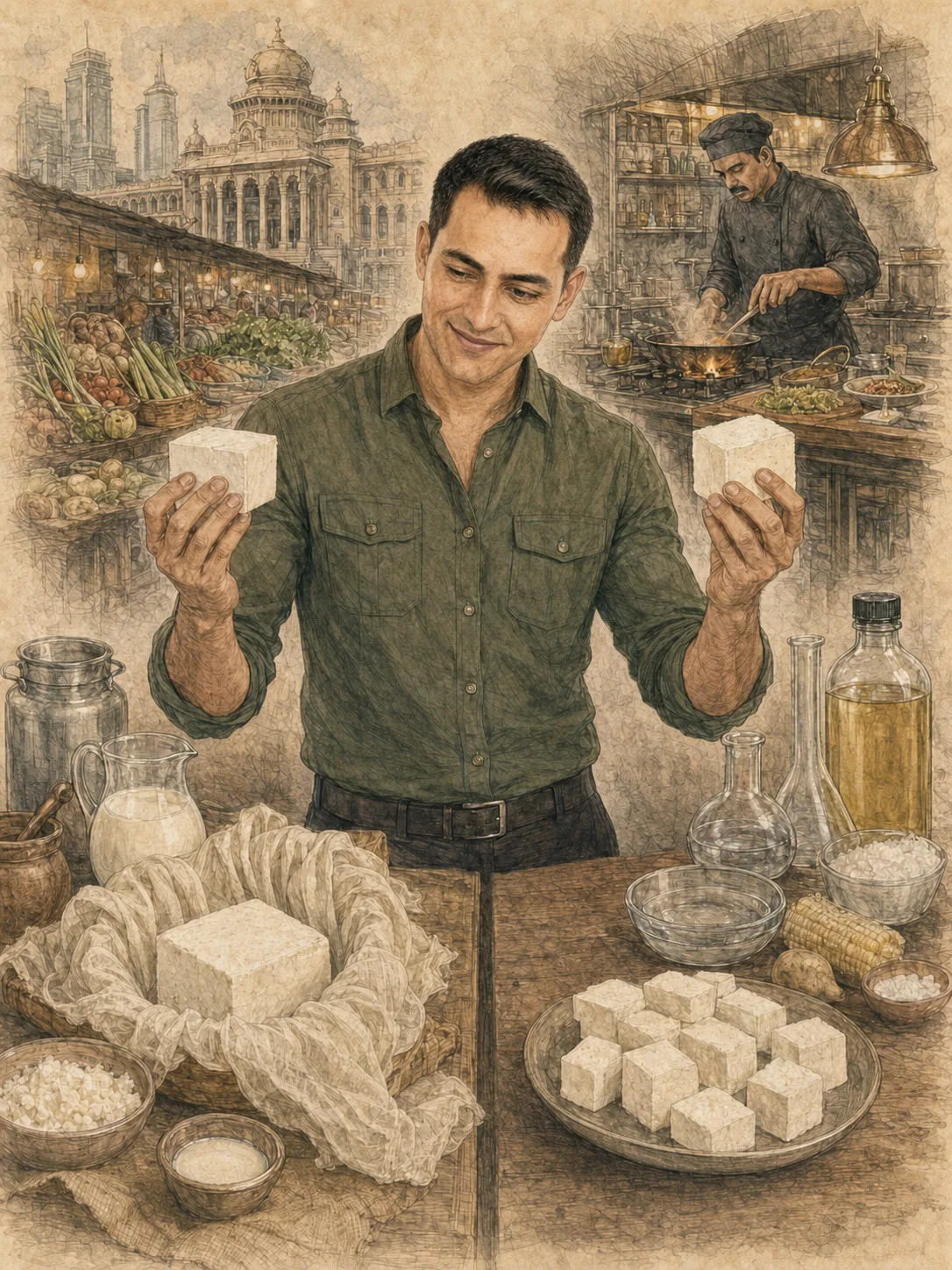
Two white cubes can look identical. Their ingredient lists should not be allowed to impersonate each other.
The Karnataka analogue paneer ban is a statewide one-year ban on non-standardised substitutes sold or used as paneer. Analogue paneer resembles dairy paneer, but replaces some or all milk fat or milk solids with vegetable oil, vegetable fat or other non-dairy ingredients.
The order covers manufacture, processing, packing, storage, transport, distribution, sale and use in prepared food.
The substitute existing is not the entire scandal. The problem is calling it paneer when the regulated definition of paneer begins with milk.
The paneer had left the dairy industry without updating LinkedIn.
What exactly has Karnataka banned?
Karnataka's Food Safety and Drugs Administration issued a one-year statewide prohibition covering the manufacture, processing, packing, storage, distribution, transportation, wholesale and retail sale, display, supply and use of analogue or non-dairy paneer.
The reported order applies specifically to dairy analogue products resembling paneer for which no separate quality standard has been prescribed. It also prevents restaurants, caterers and manufacturers from using the substitute in a dish presented as paneer.
Whole Meal
Paneer is a beautifully simple food. Milk meets acid and heat, separates into curds, gets pressed and becomes the one ingredient that can survive both a wedding buffet and a gym meal plan.
Analogue paneer is engineered to reach a similar white cube through a different route. Vegetable oil or fat can replace milk fat. Starch, emulsifiers and other ingredients help create structure and texture.
That does not automatically make every analogue food poisonous. It makes it a different product.
And different products deserve different names.
What is analogue paneer?
Analogue paneer is a non-dairy or partly non-dairy substitute designed to resemble paneer. In it, some or all milk fat or milk solids are replaced by vegetable oil, vegetable fat or other non-dairy ingredients.
Conventional dairy paneer is standardised under India's food rules as a product obtained from milk, with or without permitted milk solids, using permitted acidulants and heat. Milk fat is not a decorative suggestion in that definition. It is part of the identity.
Is analogue paneer the same as adulterated paneer?
Not exactly.
An honestly named and appropriately regulated analogue product is a substitute. Adulteration or misbranding happens when the composition is concealed, the substitute is mixed into genuine paneer without disclosure, or a non-dairy product is sold as paneer.
The FSSAI West Region public notice had already warned that using cheese analogue in food and naming the dish as paneer-based violates food law. The issue is not that vegetable oil has committed a crime by entering a kitchen. The issue is that it arrived wearing milk's name badge.
Did Karnataka discover fake paneer everywhere?
No. This is the most important fact in the story.
Officials said several paneer samples were tested and no adulteration with vegetable fat or other non-dairy ingredients was found. The state described the action as preventive. It did not publish evidence of Bengaluru restaurants collectively replacing every cube overnight.
The phrase “fake paneer Bengaluru” may attract attention, but it is not a fair summary of the evidence released with this order.
Why impose a preventive ban?
Because the substitute can be difficult for an ordinary diner to distinguish from dairy paneer once it has been cubed, marinated, fried and covered in gravy.
The 48th Central Advisory Committee minutes recorded concern that analogue paneer lacked a specific quality standard and that the choice could not simply be left to consumers who may not know what they are being served.
The buyer cannot make an informed choice if the menu removes the information.
What products are excluded?
The restriction is not a ban on every standardised food containing non-dairy fat. Products such as frozen dessert, processed cheese and mixed fat spread have their own prescribed standards and are outside this specific order.
That nuance matters. “Contains vegetable oil” is not the same legal category as “pretends to be paneer”.
Is analogue paneer cheaper?
It can be. Dairy fat and milk solids are relatively expensive, while vegetable fats and starch can reduce production cost. That price gap creates the incentive to substitute.
A cheaper alternative is not inherently wrong if the buyer knows what it is. The ethical problem begins when the restaurant charges for paneer and quietly serves something else.
Can diners identify analogue paneer by taste?
Sometimes people report a rubberier texture, unusual browning or a greasy mouthfeel. None of those is a reliable field test. Recipes, moisture, storage and cooking methods also change paneer's texture.
The ingredient declaration, invoice trail and laboratory remain more useful than squeezing a cube dramatically for the camera.
What should restaurants and consumers do?
- Restaurants should verify supplier invoices and product descriptions.
- Menus should identify an analogue product honestly wherever it is legally permitted.
- Consumers can ask whether the paneer is dairy-based when price or texture seems unusual.
- Businesses should not use a substitute in a dish named as paneer during the Karnataka prohibition.
- Suspected misbranding should be reported to food-safety authorities, not diagnosed by vibes.
This is the same transparency problem underneath ghee adulteration and misleading food claims. Composition matters because names carry expectations. It also matters when raw ingredients move sharply, as seen in India's recent sugar price rise, because cost pressure makes honest sourcing even more valuable.
Two white cubes can look identical. Their ingredient lists should not be allowed to impersonate each other.
Paneer should have to show ID.
( •̀ᴗ•́ )و