On September 3, 2026, CBS News reported that the U.S. Tech Force will test federal AI job interviews using CodeSignal. AI agents will conduct structured interviews, record and summarise the audio, and return it to human hiring managers for evaluation. The pilot targets technologists applying for two-year government roles.
One week earlier, OPM told agencies to adopt AI across the hiring lifecycle. Its guidance draws an important line: if an AI output materially drives access to employment, human review has to be independent enough to supply its own justification. “A person looked at the score” is not the same thing.
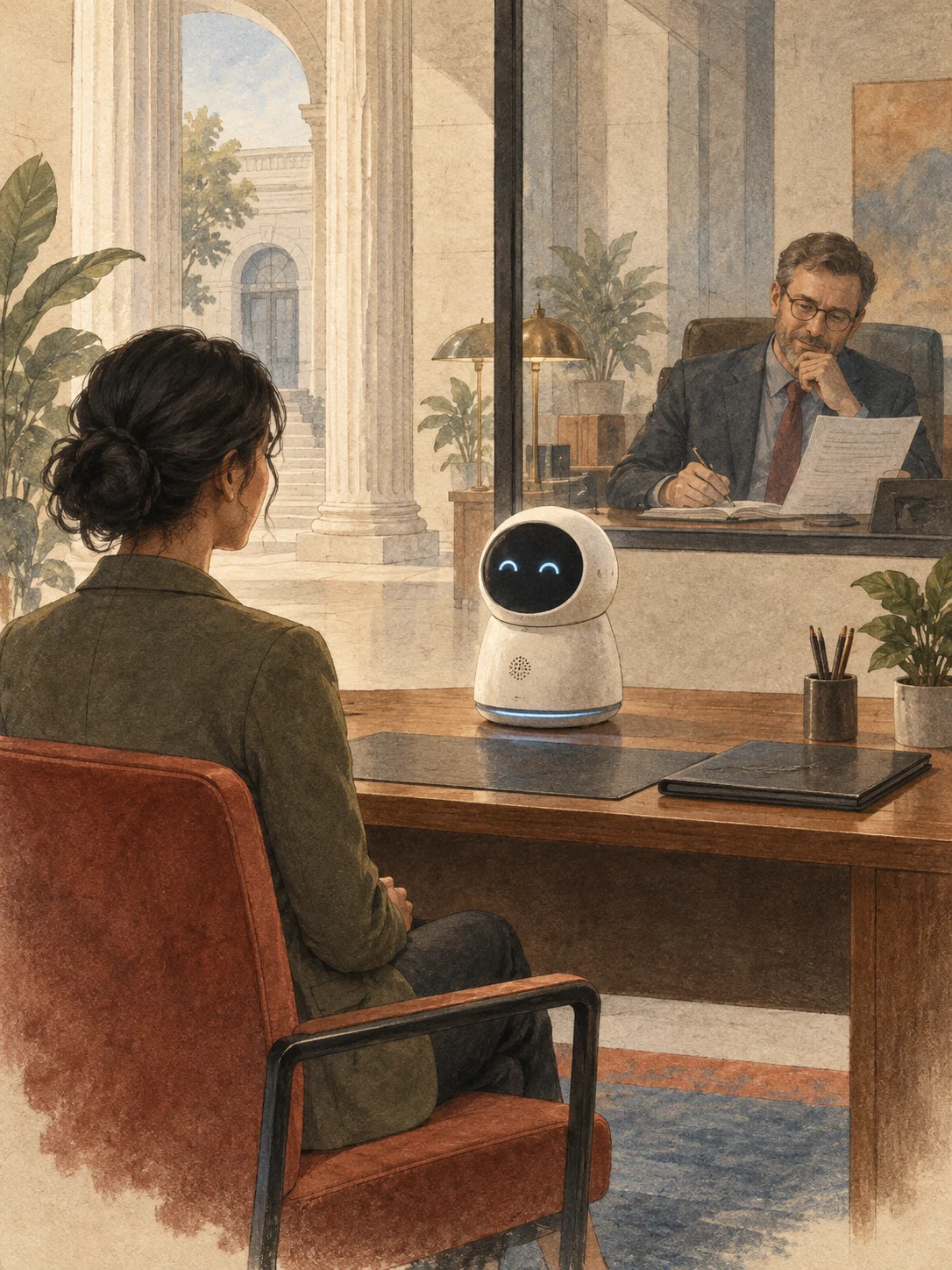
The machine can ask Who is answerable?
CodeSignal says its government product can ask follow-ups, score answers and produce recordings, transcripts, summaries and skills reports. Those are useful capabilities. They also create a durable layer of inference between an applicant's words and a decision.
What applicants still need to know
Public material describes the platform and the human review, but not every practical safeguard. Which roles enter the pilot? Is an alternative available? What is recorded? How long is it kept? Does a score decide advancement? How can an applicant correct an error? A hiring process can be technically auditable and still feel completely opaque to the person inside it.
The recruitment lesson
Consistency is valuable. So is scale. The real standard is legibility: candidates should understand what the system does, what the human decides and where an appeal can reach somebody with authority. I've spent nearly a decade in hiring. An accountable human cannot be a decorative footer on an automated process.
That is also the lesson from the interview where two bots spoke to each other. The next phase of AI hiring quality will not be won by the most charming interviewer agent. It will be won by the clearest ownership after the agent stops talking.
On September 3, 2026, CBS News reported that the U.S. Tech Force will test federal AI job interviews using CodeSignal. AI agents will conduct structured interviews, record and summarise the audio, and return it to human hiring managers for evaluation. The pilot targets technologists applying for two-year government roles.
One week earlier, OPM told agencies to adopt AI across the hiring lifecycle. Its guidance draws an important line: if an AI output materially drives access to employment, human review has to be independent enough to supply its own justification. “A person looked at the score” is not the same thing.
What is the US Tech Force AI interview pilot?
The U.S. Tech Force is a government programme intended to place about 1,000 technologists into two-year roles across federal agencies. OPM's June candidate-pool memo listed 911 eligible people across three pools: 431 software engineers, 271 IT project managers and 209 data analysts. Those figures describe available pools, not the confirmed size of the AI interview pilot.
CBS reported that CodeSignal agents will ask standardised questions, record the interview and create summaries for hiring managers. The company describes a broader commercial capability too: role-based agents can ask follow-ups, score responses and return transcripts, recordings, summaries and structured skills reports.
That does not prove every feature will be active in the federal configuration. It does show why the implementation details matter. The system may be a recorder, an evaluator or both. Those are different jobs with different consequences.
OPM wants faster hiring
Federal hiring currently averages 87 days according to OPM. The Merit Hiring Plan targets 80. OPM's August 27 guidance argues that agencies may be sacrificing both speed and quality by being too cautious about AI. It encourages uses such as drafting position descriptions, matching resume evidence to minimum qualifications and supporting assessments.
The logic is understandable. Slow hiring loses candidates. Repetitive administrative work consumes specialist time. A structured digital interview can be available across time zones and apply a consistent rubric to more people than a small team can call in one week.
But faster government hiring is not the only public value in the room. Employment decisions also need merit, due process, accessibility and a record that can survive scrutiny.
What does meaningful human oversight mean?
OPM says an AI use can become high impact when its output serves as a principal basis for a decision with a significant effect on access to employment. Independent human review can change that analysis, but only when the official reviews the supporting data, evaluates the decision logic and adopts the work product with their own justification.
That is a stronger standard than placing a human at the last step of a funnel. If the AI determines who reaches that person, the consequential decision may already have happened upstream.
Imagine an interviewer produces a low communication score because a candidate uses a speech aid, speaks in a different cadence or answers a badly framed follow-up literally. A human reviewer needs enough context and authority to inspect the evidence, disagree with the output and restore the candidate. Otherwise “human in the loop” is just a comforting diagram.
Six answers every applicant deserves
- Notice: Tell candidates before the interview that they will speak with AI.
- Purpose: Explain whether the system records, summarises, scores, recommends or decides.
- Evidence: Show what information reaches the hiring manager and how it is connected to the role.
- Alternative: Provide a clear accommodation and human-review path.
- Retention: State what audio, transcript and derived data is stored, for how long and who can access it.
- Challenge: Name the route for correcting a transcript or contesting an automated inference.
Publicly available material explains the broad system and says humans will evaluate results. It does not yet answer every one of those implementation questions for the reported pilot. Safeguards may exist privately. Candidates should not have to reverse-engineer them.
The recruitment lesson
I've spent nearly a decade in hiring and talent acquisition. Structured interviews can absolutely improve consistency. Recorded evidence can help teams calibrate. Automation can return scarce time to recruiters and managers. None of that requires pretending the machine is neutral or the candidate's experience is incidental.
The interview where two bots spoke to each other was funny because nobody seemed responsible for the outcome. The federal pilot is more consequential because responsibility is the entire point of public administration.
The next phase of AI hiring quality will not be won by the most charming interviewer agent. It will be won by a process candidates can understand and a human who can explain, change and own the decision after the agent stops talking.
The documented case of fake remote candidates and laptop farms shows why identity assurance belongs beside that accountability. Verify who is participating without asking recruiter intuition to become a security product.