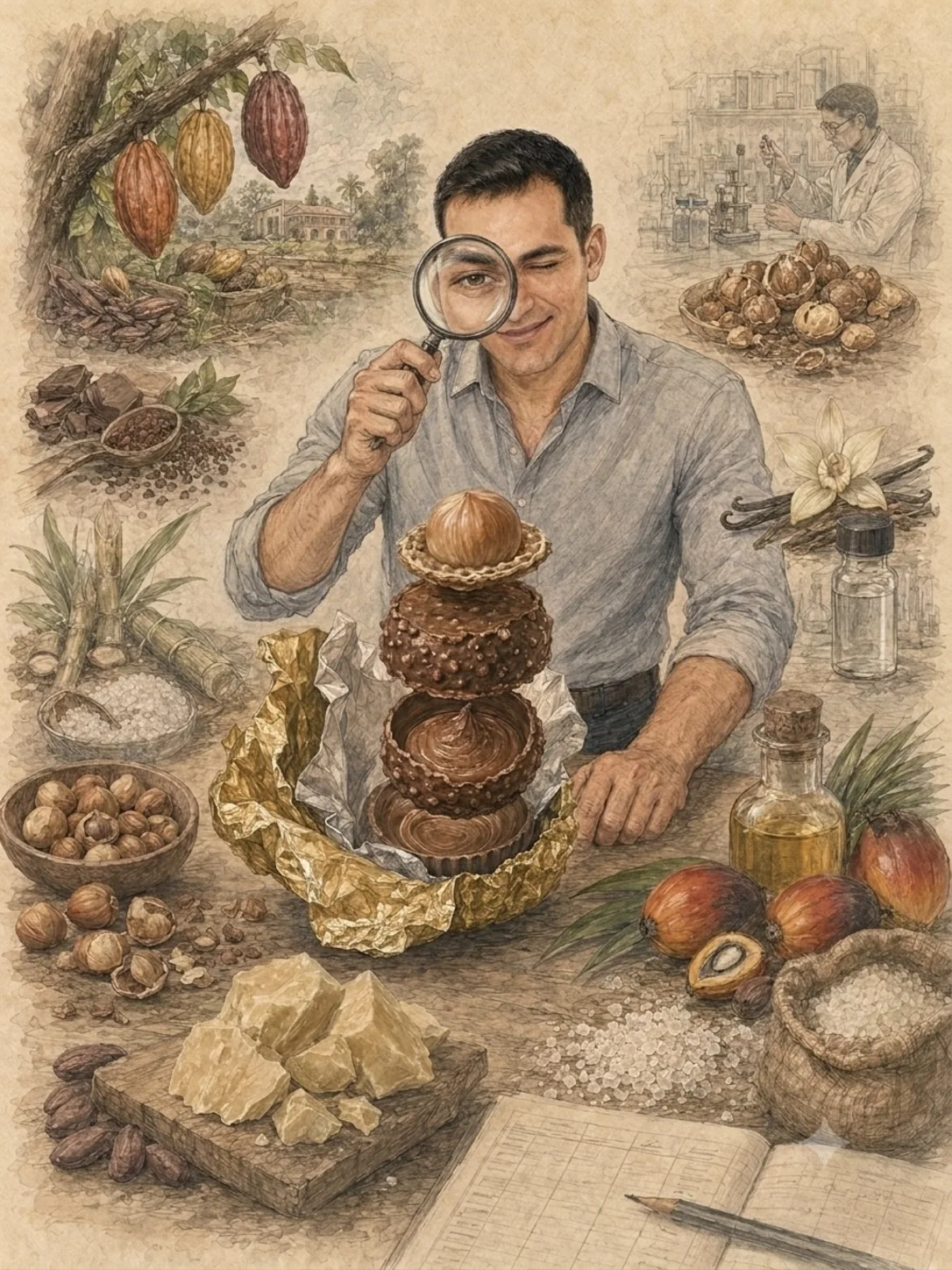
The Ferrero Rocher ingredient scandal arrived the way most modern food scandals do: somebody bothered to turn the box around and dive into that ingredient list.
According to Ferrero's own UK ingredient list, each praline contains 30% milk chocolate and 28.5% hazelnuts. The remaining Ferrero Rocher ingredients include sugar, palm oil, wheat flour, whey powder, fat-reduced cocoa, lecithin, sodium bicarbonate, salt and vanillin.
So, is Ferrero Rocher real chocolate?
Yes. But only 30% of the complete praline is its milk chocolate component. The rest creates the wafer, filling, crunch and hazelnut centre.
That distinction is important because Ferrero Rocher is not a solid chocolate bar. It is a layered praline dressed like it owns property in Monaco.
What is actually inside Ferrero Rocher?
The official label lists milk chocolate, hazelnuts, sugar, palm oil, wheat flour, whey powder, fat-reduced cocoa, lecithin, sodium bicarbonate, salt and vanillin. The UK nutrition panel reports 39.9 grams of sugar and 42.7 grams of fat per 100 grams.
Small sphere, large ambitions.
Is Ferrero Rocher really only 30% chocolate?
Yes, but the headline needs context. Ferrero Rocher is a filled, layered praline, not a solid chocolate bar. International Codex standards say a praline should contain at least 25% chocolate by total weight. Ferrero declares 30%, so legally and technically it clears that standard.
What does premium chocolate marketing sell?
The fair criticism is not that Ferrero secretly sold fake chocolate. It is that premium chocolate marketing creates a grander impression than the ingredient list necessarily supports.
Does Ferrero Rocher contain palm oil?
Yes. Palm oil is used in the filling. It helps create a smooth, stable texture and costs less than cocoa butter. Ferrero says it sources 100% RSPO-certified palm oil, primarily through a segregated supply chain.
Should you stop eating it?
Not unless you want to. Treat Ferrero Rocher like confectionery. Enjoy the hazelnut and tiny golden ceremony, but do not confuse expensive-looking packaging with superior nutrition.
Turn the box around before the marketing turns your head.
🍫
The Ferrero Rocher ingredient scandal arrived the way most modern food scandals do: somebody bothered to turn the box around and dive into that ingredient list.
According to Ferrero's own UK ingredient list, each praline contains 30% milk chocolate and 28.5% hazelnuts. The remaining Ferrero Rocher ingredients include sugar, palm oil, wheat flour, whey powder, fat-reduced cocoa, lecithin, sodium bicarbonate, salt and vanillin.
So, is Ferrero Rocher real chocolate?
Yes. But only 30% of the complete praline is its milk chocolate component. The rest creates the wafer, filling, crunch and hazelnut centre.
That distinction is important because Ferrero Rocher is not a solid chocolate bar. It is a layered praline dressed like it owns property in Monaco.
What is actually inside Ferrero Rocher?
The official Ferrero Rocher UK label lists:
- Milk chocolate at 30%
- Hazelnuts at 28.5%
- Additional sugar
- Palm oil
- Wheat flour
- Whey powder
- Fat-reduced cocoa
- Lecithin
- Sodium bicarbonate
- Salt
- Vanillin
The UK nutrition panel reports 39.9 grams of sugar and 42.7 grams of fat per 100 grams. Ferrero's American three-piece pack contains 15 grams of sugar and 230 calories. That works out to roughly 5 grams of sugar and 77 calories per golden ball.
Small sphere, large ambitions.
Whole Meal
The viral Ferrero Rocher ingredients controversy is not really about discovering a forbidden chemical because the ingredients are disclosed on the packaging. The controversy is about the expectations set by Ferrero Rocher. The company has spent decades building a brand image around gold wrapping, elegant gift boxes, careful craftsmanship and luxurious chocolate. Of course consumers will associate all that presentation with a particularly high-quality chocolate product.
The ingredient list tells a more ordinary story. It is a carefully engineered confection containing chocolate, hazelnuts, sugar, palm oil and wafer. It may be delicious, but it is not the same thing as a high-cocoa artisan chocolate. That does not make it fraudulent, but it does make the gold wrapper extremely good at its job. All show and no go.
Is Ferrero Rocher really only 30% chocolate?
Yes, but the viral headlines can be misleading. Thirty percent refers to the proportion of milk chocolate in the complete praline. That does not mean Ferrero removed 70% of the cocoa from a chocolate bar and replaced it with industrial goo. Ferrero Rocher is a filled, layered product. International Codex standards for chocolate and chocolate products state that a praline should contain at least 25% chocolate by total weight.
Ferrero declares 30%. Legally and technically it clears that standard.
The more interesting question is whether most people buying a premium box realise that chocolate represents less than one third of the complete product. Probably not.
Does Ferrero Rocher contain palm oil?
Yes. Palm oil appears separately in the ingredient list and is used in the filling rather than hidden inside the declared milk chocolate component. Palm oil is not automatically poisonous, despite what dramatic social media videos may suggest. It is useful in confectionery because it creates a smooth texture, remains stable and costs less than cocoa butter. It is also rich in saturated fat. The World Health Organization recommends keeping saturated fat below 10% of total energy intake.
There is also an environmental concern around poorly managed palm oil production. Ferrero says it sources 100% RSPO-certified palm oil, primarily through a segregated supply chain that keeps certified oil separate and improves traceability. That does not transform Ferrero Rocher into a health food, but it is important context.
What about vanillin?
Ferrero Rocher uses vanillin rather than advertising the product as containing vanilla beans.
Vanillin is a flavouring compound used to reproduce the main flavour associated with vanilla. The American ingredient list explicitly describes it as an artificial flavour. That is a fair reason to question the word "premium".
This is not evidence that the chocolate is dangerous. Words such as artificial, emulsifier and raising agent can sound alarming when placed over suspenseful music. In this case, lecithin helps ingredients combine, while sodium bicarbonate helps create the wafer.
Chemistry has once again been caught doing chemistry.
What did the viral posts get right?
They correctly encouraged people to read the ingredient list instead of judging food by its packaging. They also exposed a genuine gap between premium presentation and nutritional reality. Ferrero Rocher is high in sugar and fat. It contains palm oil and artificial flavouring. Its chocolate component accounts for 30% of the total product.
Those are reasonable things to know before buying it.
What did they get wrong?
Calling Ferrero Rocher "fake chocolate" goes too far. It contains real milk chocolate made with cocoa butter and cocoa mass. Its chocolate proportion also exceeds the international minimum for a praline. The accurate criticism is not that Ferrero secretly sold something illegal. It is that the packaging creates a grander impression than the ingredient list necessarily supports. Sensationalisation is not new. It is kind of on trend.
That distinction matters, just as it did when the internet melted two different Lindt lawsuits into one story. The correction is often more interesting than the scandal.
So, should you stop eating it?
Not unless you want to. Ferrero Rocher is confectionery. Treat it like one. Enjoy a couple because you like the texture, hazelnut and tiny golden ceremony. Just do not confuse expensive-looking packaging with superior nutrition.
If you want more actual chocolate, compare products using:
- Total cocoa percentage
- Sugar per 100 grams
- Ingredient order
- Added vegetable oils
- Whether vanilla or vanillin is used
That same habit helps when other staple ingredients suddenly become the story, including India's recent sugar price rise.
As a recurring theme in my blogs, the lesson is beautifully simple. Turn the box around before the marketing turns your head. Ferrero Rocher still tastes good. The gold wrapper just deserves a little title: employee of the month.
🍫